On 24 October 2025, the United Nations (UN) Charter will mark its 80th anniversary. When the Charter came into force, the UN General Assembly (UNGA) had 51 member states. Today, there are 193 member-states in the UNGA, of whom 134 have declared themselves to be developing countries under the banner of the Group of 77 (G-77). Most members of the G-77 are popularly referred to as the Global South. The interests of the Global South have been brought into the mainstream activity of the UN between 1964, when the G-77 was founded, and 2015, when the UNGA adopted its historic Agenda 2030 on Sustainable Development, with 17 Sustainable Development Goals (SDGs).
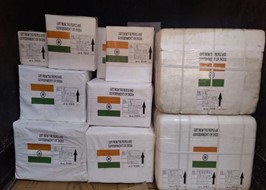
In a significant move to bolster its commitment to the Global South, India dispatched vital humanitarian aid to the central African nation of Sao Tome & Principe.
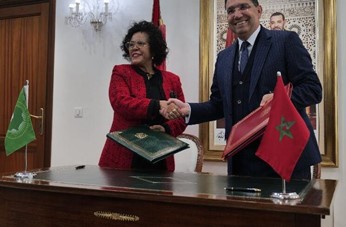
Morocco’s commitment to Africa’s development was formalized by the signing of two agreements between the kingdom and the African Union Development Agency (AUDA-NEPAD).
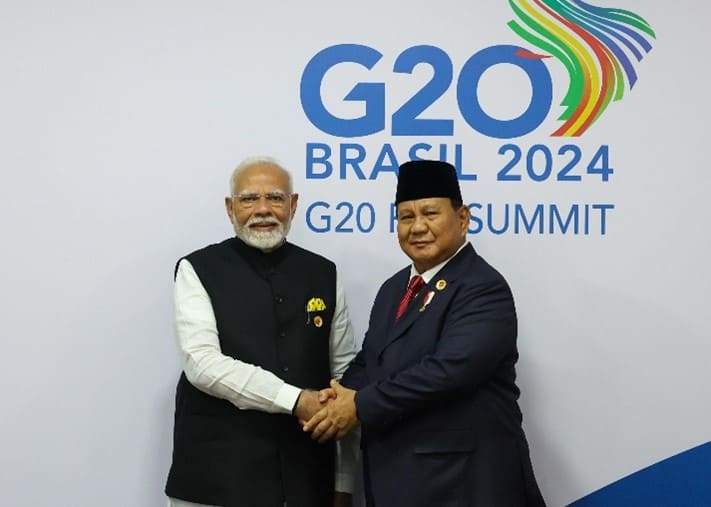
Indonesian President Prabowo Subianto’s two-day visit to India beginning Saturday is expected to inject a new momentum in bilateral ties with both sides set to firm up several pacts to expand cooperation in a number of areas.
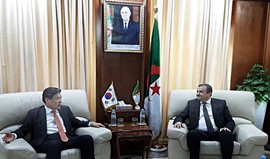
Algerian Minister of State, Minister of Energy, Mining and Renewable Energy, Mohamed Arkab, received the Ambassador of the Republic of Korea to Algiers, You Ki-Jun, with whom he examined ways to strengthen bilateral cooperation and partnership in various areas of the sector.
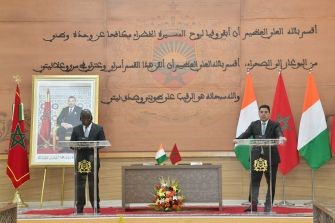
Speaking at the fifth session of the Morocco-Côte d’Ivoire Grand Joint Cooperation Commission, it was stressed that these ties which have always developed significantly at various levels, continue to enshrine their economic and strategic synergy.
India wants to engage more with the “government of the people of Afghanistan” on development cooperation and do more in terms of offering humanitarian assistance.
The International Livestock Research Institute has signed a memorandum of understanding with seven Ethiopian universities: Adigrat, Aksum, Ambo, Bonga, Jimma, Mekele and Raya.
Amid the pressures of the COVID-19 pandemic, South Africa’s Ministry of Health moved to approve the use of telemedicine as a necessity. Since then, it has stayed on as a tech tool managing another, older pandemic: HIV.